
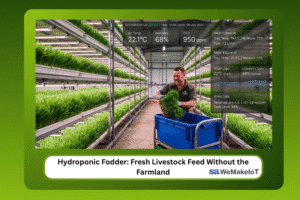
Hydroponic Fodder: Fresh Livestock Feed Without the Farmland Farmers in the UK, US, and Australia are all facing the same squeeze: shrinking pasture, unpredictable weather, and rising hay prices. Hydroponic fodder is one answer worth knowing about. What Is Hydroponic...
Read More >>ESP32 IoT Development
& Firmware Services
WeMakeIoT builds production-grade firmware and hardware around ESP32 - and brings in STM32, Nordic's nRF52 series, Raspberry Pi, or Particle when a project calls for a different trade-off in power, connectivity, or processing. From Wi-Fi/BLE/cellular connectivity to OTA updates and cloud integration, our team has shipped microcontroller-based products for startups and manufacturers across 20+ countries.
Why ESP32What we buildChoosing the right platform
FAQExplore further
View technology stack →
Explore LoRaWAN →
Explore SensorVision →
Explore BLE →
Explore Particle →
Read the UK
farming guide →
ESP32 is our default microcontroller for connected products because it packs Wi-Fi, Bluetooth, and a full security stack onto one low-cost chip. Its dynamic power scaling and low-duty-cycle operation make it suitable for battery-run sensor hubs, while its -40°C to +125°C operating range holds up in industrial environments.
📶
Wi-Fi + Bluetooth Built In
Dual-mode wireless on a single chip - no external radio module or extra integration work needed.
🔋
Dynamic Power Scaling
Low-duty-cycle operation lets battery-run sensor hubs and data loggers run for months between charges.
🌡️
Industrial Temperature Range
Rated for -40°C to +125°C, so it holds up in outdoor enclosures and industrial settings.
🔐
Hardware Security
Secure boot, flash encryption, and cryptographic hardware acceleration are built in, not bolted on.
💰
Mass-Producible
Low-cost and manufacturable at scale without expensive tooling or custom equipment.
🧩
Versatile by Design
From home automation to smart agriculture, healthcare, and industrial sensor hubs - one platform, many use cases.
Firmware and hardware services built around ESP32, with STM32 and Raspberry Pi brought in when the project calls for it.
📡
ESP32 Firmware Development
Core serviceCustom firmware for sensor drivers, edge logic, Wi-Fi/BLE communication, power management, and OTA update handling - built on the ESP-IDF or Arduino framework depending on the project.
☁️
Cloud & App Integration
Full-stackConnecting ESP32 devices to AWS IoT, Azure IoT, ThingsBoard, or SensorVision - plus the mobile and web apps that sit on top of the device data.
🖥️
Custom Hardware & PCB Design
HardwareTaking a breadboard prototype to a production-ready board sized for your enclosure, power budget, and manufacturing volume.
⚙️
STM32 Firmware & Low-Power Design
Alternative
MCUFor wearables, data loggers, and vending controllers needing precise peripheral control (ADC, timers, CAN) or ultra-low power modes, often paired with an external radio like LoRaWAN.
🥧
Raspberry Pi Edge Gateways
Edge computingWhen a project needs more processing power than a microcontroller can offer - computer vision, multi-sensor aggregation, or local dashboards bridging field hardware to the cloud.
🔄
OTA & Fleet Management
Post-launchFirmware update pipelines for devices already in the field, so bug fixes and new features roll out without a truck roll.
🔵
nRF52 Series Firmware & BLE Design
Ultra-low-power BLENordic's nRF52 series when a design needs Bluetooth 5 or Bluetooth Mesh with the lowest possible power draw - wearables, beacons, and coin-cell devices that need to last years, not months.
📶
Particle Cellular Connectivity
CellularFor assets that move or sit outside any Wi-Fi or LoRaWAN coverage, we build on the Particle platform for managed cellular connectivity and device fleet management.
ESP32 is our default, but it isn't always the right fit. Here's the quick decision framework we use with clients.
📡
ESP32
Best for: Wi-Fi/BLE-connected sensor nodes and consumer or industrial products needing built-in wireless, OTA updates, and low unit cost at scale.
⚙️
STM32
Best for: Ultra-low-power, battery-run devices needing precise peripheral control - wearables, data loggers, vending controllers - often paired with an external radio like LoRaWAN.
🔵
nRF52 Series
Best for: Bluetooth 5 / BLE Mesh devices where power budget is the top priority - beacons, coin-cell wearables, and sensors expected to run for years.
🥧
Raspberry Pi
Best for: Edge gateways needing real processing power - computer vision, multi-sensor aggregation, local dashboards - bridging field hardware to the cloud.
📶
Particle
Best for: Mobile or remote assets outside Wi-Fi/LoRaWAN range that need managed cellular connectivity and fleet management out of the box.
ESP32 family & dev boards
General purpose
AI / vision workloads
RISC-V, cost-optimised
Legacy, Wi-Fi only
BLE 5 / Mesh
Real projects: ESP32, STM32 & Raspberry PiGetting Started Fast
We pick the right variant for the job rather than defaulting to one board for every project.
🔧
ESP32-WROOM-32General purpose
🎥
ESP32-S3AI / vision workloads
💲
ESP32-C3RISC-V, cost-optimised
📶
ESP8266Legacy, Wi-Fi only
🔵
nRF52840 DKBLE 5 / Mesh
🌫️
Indoor Environmental Monitoring
ESP32ESP32-WROOM-32UE-based wireless nodes tracking air quality, humidity, and hidden moisture in real time.
Read the case study →📡
LoRa Point-to-Point with ESP32
ESP32Pairing ESP32 dev boards with LoRa E5 modules for long-range, low-power point-to-point messaging.
Read the case study →📊
Wireless Data Logger
STM32A battery-run STM32 data logger with low-power mode, sending readings over LoRaWAN at set intervals.
Read the case study →🐾
Wearable Pet Tracker
STM32An end-to-end STM32 and GPS-based wearable for tracking pet safety and health.
Read the case study →🏪
Smart Vending Machine
STM32STM32 and GSM-based vending controller with OTA updates and a power-optimised, battery-operated design.
Read the case study →📺
Digital Signage Ads
Raspberry PiA Raspberry Pi-driven signage player with a two-tier web portal for managing playlists remotely.
Read the success story →Why choose ESP32 over a plain Wi-Fi module?
ESP32 bundles the microcontroller, radio, and security hardware onto one chip, so you're not
integrating a separate MCU and Wi-Fi module - which usually means a smaller board, lower cost, and less firmware
complexity.
When should I use STM32 instead of ESP32?
When a project needs lower power draw than ESP32 can offer, precise peripheral control (CAN,
high-resolution ADC, custom timers), or when you're pairing the MCU with an external radio like LoRaWAN rather
than needing Wi-Fi built in.
When does a project need Raspberry Pi instead of a microcontroller?
When the workload needs real processing power - computer vision, local data analytics, or
acting as a gateway that aggregates and forwards data from many sensor nodes.
What about nRF52 or Particle instead of ESP32?
We reach for Nordic's nRF52 series when a device is BLE-only and power budget is the top
priority - it beats ESP32 on standby current for coin-cell wearables and beacons. We reach for Particle when the
device needs cellular connectivity because it's mobile or outside any Wi-Fi/LoRaWAN coverage.
Can ESP32 devices receive firmware updates remotely?
Yes - OTA (Over-The-Air) update support is standard in our ESP32 firmware builds, so bug fixes
and new features can roll out to deployed devices without physical access.
How many units can WeMakeIoT help me scale to?
We focus on design and development, taking your idea from single prototypes to its first market-ready version. While we don't handle mass manufacturing or bulk order assembly, we equip you with everything needed for full-scale production—including complete firmware, mobile/web apps, and cloud integration. Once your initial product is validated, your team or manufacturing partner can easily print PCBs and assemble units for scaled production.
See the full IoT technology stack
How ESP32 fits alongside LoRaWAN, BLE, and Particle in WeMakeIoT's approach to protocol selection.
Need long-range connectivity instead?
When Wi-Fi range isn't enough, LoRaWAN covers sensors spread across large outdoor or indoor areas.
SensorVision - our IoT SaaS platform
Route ESP32, STM32, or Raspberry Pi device data straight into a ready-made dashboard with device management and alerting.
Bluetooth Low Energy Development
For short-range, battery-efficient applications - including nRF52-based designs - where BLE fits better than Wi-Fi.
Need cellular connectivity instead?
Particle covers assets that move or sit outside Wi-Fi and LoRaWAN coverage, with managed cellular and fleet tools built in.
Building for UK agritech?
See how ESP32 sensor nodes and Raspberry Pi gateways work together in a real smart farming deployment.
Have hardware or firmware to build?
Tell us what you're building - we'll give you an honest read on which platform fits, what a prototype timeline looks like, and what it takes to get to production.
Blogs
Recent Blog
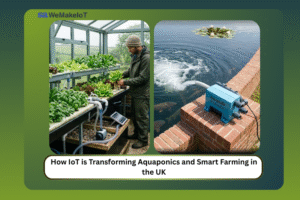
The UK Agritech Opportunity You Cannot Afford to Miss The UK agritech market is growing fast. It reached $635 million in 2024 and is on track to exceed $1.7 billion by 2033. For startups and mid-sized companies building smart farming...
Read More >>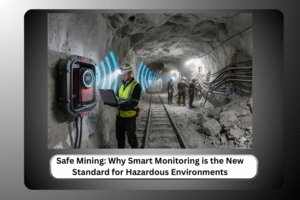
Safe Mining: Why Smart Monitoring is the New Standard for Hazardous Environments In the deep tunnels of a coal mine, temperature is more than just a weather report, it is a life-saving measurement. In these harsh environments, heat is a...
Read More >>