End-to-End IoT R&D: From Concept to Production-Ready Systems
We transform ideas into fully functional IoT solutions, combining hardware engineering, secure firmware, cloud infrastructure, and automation to accelerate your product journey.
- Rapid prototyping with production-ready design
- Secure, scalable, and low-power systems
- Full-stack IoT or Partial IoT Development

Who This Is For
Built for IoT Innovators, Startups, and Enterprises
-
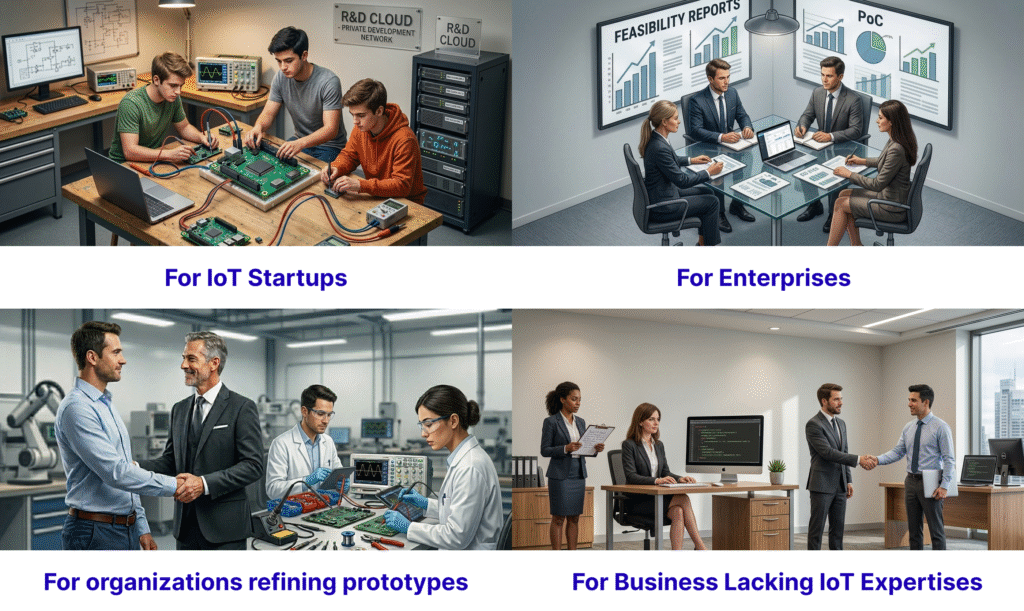
- Startups building their first IoT prototype
- Enterprises seeking R&D support for specialized research, feasibility reports, or PoCs.
- Organizations that require specialized expertise to bring incomplete prototypes to full functionality.
- Businesses lacking in-house IoT or embedded expertise
Hardware & Embedded R&D
Hardware, Firmware, and Device Communication
Researching and prototyping embedded solutions, including hardware-software integration and device-level communication.
Technology Stack
Experienced Hardware Controllers and Processors:
ESP32 / ESP8266, STM32 (ARM), Nordic (nRF), Arduino, Raspberry Pi, Particle
Protocols & Communication:
RS485, Modbus, CAN Bus, I2C, SPI, UART
LoRa / LoRaWAN, Sigfox, Cellular (4G, LTE-M, NB-IoT), Wi-Fi, BLE, Zigbee, Ethernet
Security (Device Level):
- Secure firmware handling
- Encrypted communication (SSL/TLS)
Development Process:
- Planning and Requirement Gathering
- Component selection (based on power, cost, environment)
- Circuit prototyping and validation
- Firmware development (C/C++, MicroPython, Node-RED)
- Testing and Quality Assurance (QA)
- Pre-production sample with BOM and schematics
Mining Safety Station Story (Hardware & Embedded)
Project Story
Enquiry / Problem:
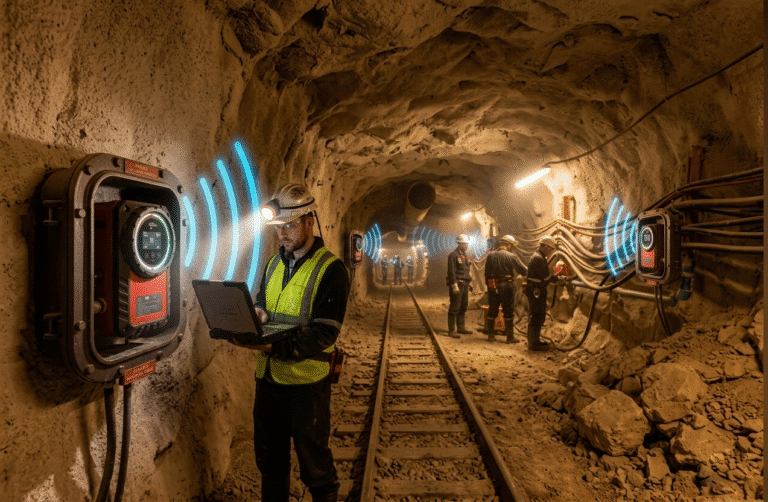
Requirement to monitor temperature and critical safety parameters in deep mining environments where traditional communication methods (Wi-Fi, Bluetooth, Cellular) are unreliable. The system needed to support 50–60 devices, with at least 12 devices forming a local network to share nearby station data. Additionally, users required access to real-time data via a local interface, along with on-device visualization and battery monitoring using an external BMS.
R&D:
Researched and designed a device-to-device communication architecture, data flow between nodes, and a decentralized network for sharing nearby station data. Developed the embedded web server structure, local database handling, and integration methods for sensors, external BMS, and multiple display units, including a main screen and round LCD.
Solution:
Implemented a LoRa-based distributed monitoring system where devices communicate with each other and share local data efficiently. Built an embedded web application hosted on the device, accessible via hotspot or connected Wi-Fi, enabling real-time visualization of temperature, battery data, and graphs. Integrated a main display and round LCD for instant on-device insights, along with seamless battery data extraction through the external BMS.
Fish farming Story (Hardware & Embedded)
Project Story
Enquiry / Problem:
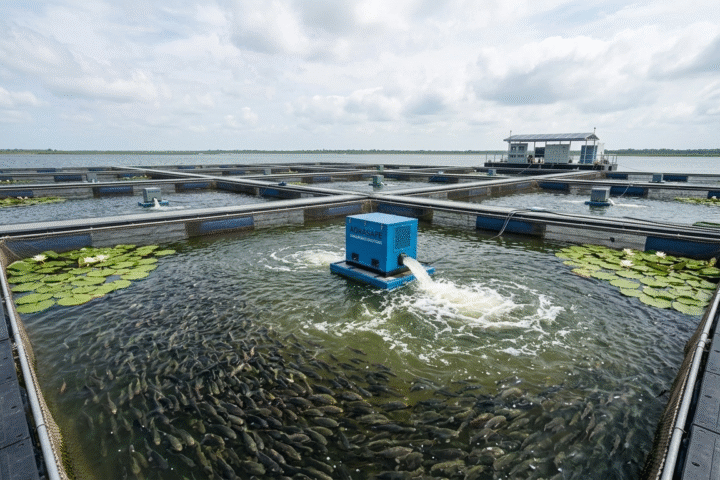
The client, operating in the aquaculture (fish farming) sector, required a system to monitor and control critical water quality parameters, including dissolved oxygen, pH, salinity, turbidity, and temperature. The system needed to automatically initiate corrective actions whenever these parameters crossed defined thresholds to maintain optimal conditions for fish health.
In addition, the client wanted to explore a vision-based approach using a Pi Camera to determine the status of fish (alive or inactive/dead) by analyzing movement as the primary indicator. The solution also needed to support real-time alerts, notifications, and intruder detection for improved farm security.
R&D:
Research and development efforts were specifically focused on the Pi Camera integration using a Raspberry Pi. This involved experimenting with motion detection techniques to identify fish movement and determine their status (alive or inactive). The objective was to evaluate whether movement-based vision monitoring could complement sensor data and enhance alert mechanisms.
Solution:
We developed a complete end-to-end IoT solution that included custom PCB design, firmware development, and a web application with backend integration. The system continuously monitors water quality parameters and automatically performs control actions based on predefined thresholds.
It provides real-time alerts, notifications, and intruder detection, ensuring proactive farm management. The vision-based module was explored as an enhancement to assess fish status through movement detection, supporting better monitoring and decision-making.
Web Application R&D
Web-Based Monitoring and Control Systems
Research and Development of web applications for device management, data visualization, Cloud integration, migration, and backend processing.
Technology Stack
Language:
MERN, MEAN, LAMP, .NET
Databases:
PostgreSQL, MySQL, MS SQL Server, MongoDB, Cosmos DB, DynamoDB
Cloud & Backend:
AWS (IoT Core, EC2, Lambda, S3, SQS, SES, DynamoDB)
Microsoft Azure (IoT Hub, App Services, Cosmos DB, Storage)
Security:
- Authentication (JWT, Azure AD B2C)
- Secure APIs and encrypted communication
Development Process:
- Planning and Requirement Gathering
- UI/UX Design and Prototyping
- Development and Implementation
- Testing and Quality Assurance (QA)
- Deployment and Launch
- Maintenance and Continuous Improvement
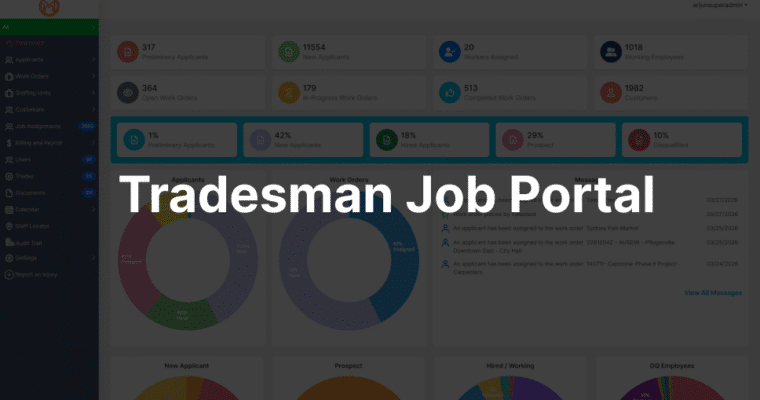
Tradesman Job Portal Story (Web Application)
Project Story
Enquiry / Problem:
Requirement to rebuild an existing WordPress-based Tradesman job portal due to performance issues, bugs, and limited scalability. The client also required migration of existing data from the WordPress database to a custom MySQL database, along with improvements in functionality and location-based job search features.
R&D:
Researched and selected the MEAN stack for building a scalable and high-performance web application. Conducted a detailed analysis of WordPress database structure for migration to a custom MySQL schema. Explored data migration strategies to ensure integrity and consistency. Additionally, evaluated Google Maps integration for implementing location-based job listings and search functionality.
Solution:
Phase 1: Developed a MEAN stack web application by replicating existing features and enhancing functionality based on client requirements.
Phase 2: Executed migration of data from the WordPress database to a structured MySQL database, ensuring seamless transition. Integrated location-based features using Google Maps for improved user experience.
Outcome:
Delivered a scalable and high-performance job portal with improved functionality, successful data migration, and enhanced user experience through location-based features.
Mobile Application R&D
Mobile Interfaces for IoT Systems
Mobile R&D for real-time device interaction, remote monitoring systems, Cloud Integration, and automated alerting.
Technology Stack
Platforms:
Flutter, React Native, Ionic Native Android and iOS
Integration:
- API-based backend connection
- MQTT/WebSocket-based communication
Security:
- Secure login and data transmission
Development Process:
- Planning and Requirement Gathering
- UI/UX Design and Prototyping
- Development and Implementation
- Testing and Quality Assurance (QA)
- Deployment and Launch
- Maintenance and Continuous Improvement
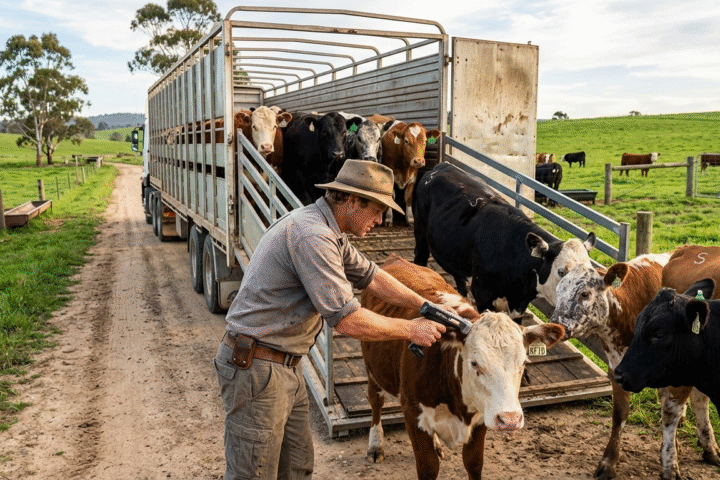
Livestock Management App Story
Project Story
Enquiry / Problem:
Requirement for a mobile application to manage livestock data by integrating with an existing Bluetooth Classic-enabled RFID scanner. The solution needed to capture RFID tag data, allow users to record detailed cattle information (gender, breed, health status, weight, etc.), and manage farm, ranch, and user configurations. Additionally, the system had to function offline, store data locally, and support report generation and cloud sharing.
R&D:
Explored integration of Bluetooth Classic communication between the RFID scanner and mobile devices for reliable data transfer. Researched local database management on mobile devices and efficient handling of configuration files. Investigated Google Drive integration, including file upload workflows, offline queuing mechanisms, and user confirmation handling for delayed data sync.
Solution:
Developed a mobile application that connects to the RFID scanner via Bluetooth Classic and captures tag data seamlessly. Enabled users to add and manage cattle details, stored securely in a local database. Implemented CSV report generation with options to visualize data as PDF within the app. Integrated Google Drive upload functionality with an offline queue system that syncs data once internet connectivity is restored, ensuring no data loss.
Outcome:
Delivered a fully functional mobile application for livestock management, enabling efficient data collection, offline operation, and automated report generation with reliable cloud synchronization.
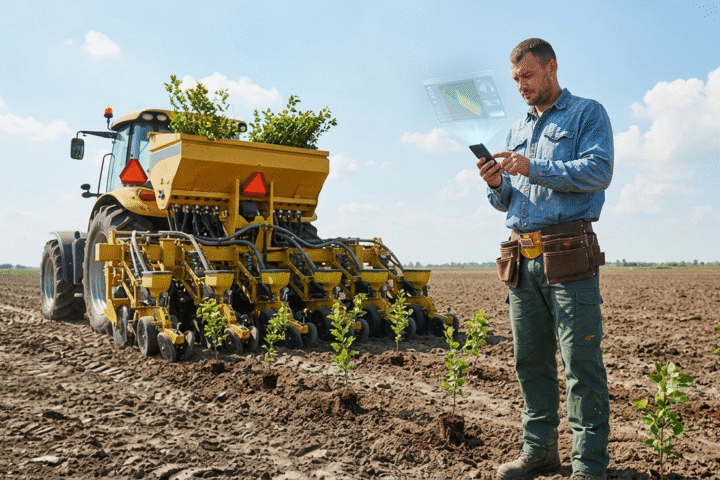
Seed Dispenser Story
Project Story
Enquiry / Problem:
Requirement for a technology-driven solution in agri-tech to enable precise seed planting at predefined gaps. The key challenge was accurate distance measurement in real-world muddy or uneven conditions, where wheel rotation alone could not reliably determine movement, leading to potential errors in seed spacing.
R&D:
Researched RTK GNSS and PointPerfect Flex technology to achieve high-precision positioning. Evaluated GPS module capabilities for centimeter-level accuracy and studied methods to overcome inaccuracies caused by wheel slippage. Explored integration of positioning data with embedded firmware for real-time distance calculation and control.
Solution:
Implemented a precision-based system using GPS modules integrated with RTK GNSS and PointPerfect Flex corrections to accurately calculate movement and seed spacing in the centimeter range. Developed firmware to control seed planting operations, along with monitoring parameters such as temperature and speed, ensuring consistent and reliable field performance.
Outcome:
Successfully delivered a high-accuracy seed planting solution (Mobile App and Firmware) capable of maintaining precise spacing even in challenging field conditions, supported by robust firmware and real-time positioning technology.
AI (Research & Capability)
AI Tools for Development and Testing
Exploration and implementation of AI tools to support development workflows and testing.
Current Capabilities:
- Test script generation using Code Llama (via Ollama)
- Workflow automation using LangChain
Technology Stack
Languages:
- Python (AI workflows)
- JavaScript (Cypress testing)
Scope:
- AI-assisted testing
- Development support tools